
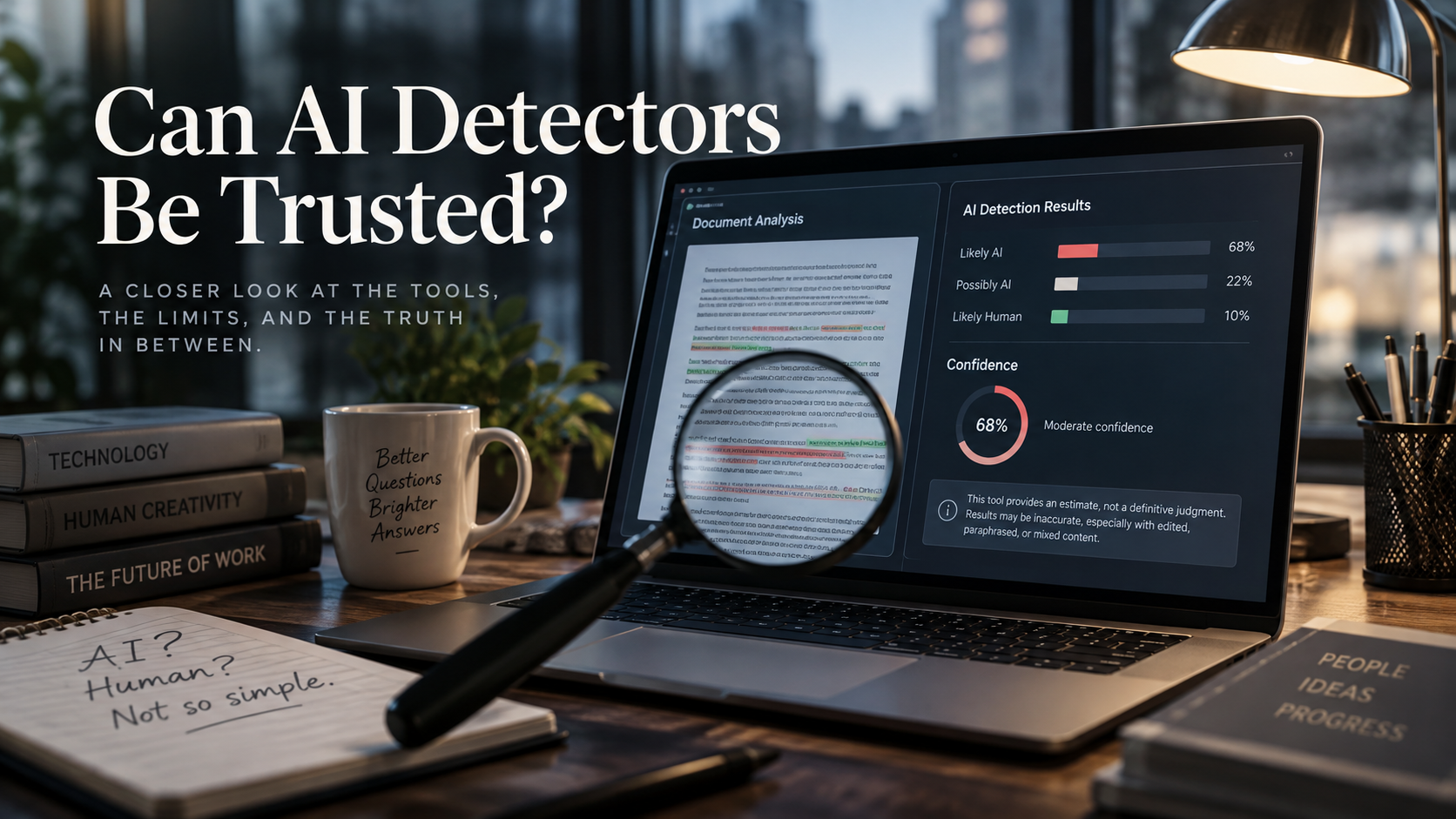
What these tools actually measure, where they break, and how much weight their verdicts really deserve.
What an AI detector claims to do
An AI detector promises something simple. You paste in a passage, and it tells you whether a human or a machine wrote it, usually as a tidy percentage.
That number then gets used to make real decisions. A teacher decides whether to open a misconduct case. An editor decides whether to kill a draft. A recruiter decides whether a cover letter is genuine.
The stakes are a failing grade, a rejected article, a withdrawn offer. So the question is not whether the tool sounds confident, because it always does. The question is whether that confidence is earned.
How an AI detector reads your text
Different tools differ in the details, but almost all of them run the same four-step pipeline. Understanding it explains both what they catch and why they misfire.
Step 1: Break the text into tokens
The tool first splits your writing into small pieces, whole words and word fragments called tokens. Working at this level lets a language model score the passage piece by piece rather than as one lump.
Step 2: Score how predictable it is (perplexity)
At each point the model asks how surprised it is by the next word. That surprise is measured as perplexity. Machines tend to reach for the safest, most expected word, so low, even predictability across a whole passage is read as a machine fingerprint.
Step 3: Measure the rhythm (burstiness)
Humans write in bursts, a long, winding sentence followed by a short, blunt one. Detectors measure how much sentence length and complexity vary. Flat, uniform rhythm looks machine-made, while jumpy variation looks human.
Step 4: Blend the signals into a verdict
Finally the tool weighs perplexity and burstiness against patterns it learned from a training set of human and AI writing, then prints a probability such as 92 percent AI. That single figure hides every assumption underneath it, and that is exactly where the trouble starts.

Detectors are themselves machine-learning models trained to recognise the statistical shadow of other models..
The accuracy problem
Here is the uncomfortable part. A detector’s reliability shifts with the tool you pick, the length of the text, the model that wrote it, and where the pass-or-fail threshold is set. The percentage looks fixed, but the ground under it is not.
The clearest warning came from the company best placed to build a good detector. On 20 July 2023, OpenAI quietly retired its own AI Classifier, citing a low rate of accuracy. By its own reporting the tool caught only about a quarter of AI text and wrongly flagged human text roughly one time in eleven.
Independent research since then has not been kinder. The most striking failures are the false alarms, and how sharply they climb once the writer is not a native English speaker.
How often human writing was flagged as AI (false-positive rate by context)
| Context | False-positive rate |
|---|---|
| Vendor’s own test, native English (Turnitin claim) | under 1% |
| Independent testing, human-written text | 15 to 26% |
| Essays by non-native English writers (Stanford) | 61% |
Figures drawn from vendor statements, an International Journal for Educational Integrity review, and the Stanford study on non-native English writers. They measure human text wrongly labelled as AI.
If the firm that built the model could not build a detector it trusted, that tells you how hard the problem really is.
False positives versus false negatives
Every detector fails in two opposite directions, and the two failures hurt very different people. Pulling them apart is the single most useful thing you can do before you trust a score.
A false positive flags human writing as AI. A false negative lets AI writing pass as human. Tuning a tool to reduce one almost always increases the other.
| Point of comparison | False positive | False negative |
|---|---|---|
| Plain meaning | Human writing is labelled as AI | AI writing is labelled as human |
| Everyday example | A student’s original essay is marked 90% AI | A fully ChatGPT-written essay is marked 100% human |
| Who gets hurt | The honest writer who is wrongly accused | The institution and the honest peers who are undercut |
| Root cause | Human text that happens to be predictable and even | AI text that has been edited, paraphrased, or humanised |
| Typical trigger | Short texts, non-native English, formulaic templates | Light manual edits or a paraphrasing tool |
| Real-world consequence | A misconduct case, a rejected piece, lost trust | Cheating goes unnoticed and the policy looks toothless |
| Where it bites hardest | Schools and admissions, where accusations are serious | Content and SEO work, where volume hides misses |
| How to reduce it | Raise the threshold and demand corroborating evidence | Lower the threshold and accept more false alarms |
| Why it is hard to fix | Some humans naturally write with low perplexity | Modern models write with more human-like variety |
The table shows the trap plainly. You cannot dial both errors to zero at once, so every detector is really a choice about which kind of unfairness you are willing to live with.
Case study: the day a detector “caught” the US Constitution
The best way to feel the accuracy problem is to watch it happen to a document nobody could possibly attribute to a machine.
The example
In April 2023 people began pasting the opening of the 1787 United States Constitution, the famous “We the People” preamble and first article, into GPTZero. The tool reported that about 96% of it was likely written by AI. Passages from the Bible produced the same alarming result.
The document predates the computer by more than a century and a half. Yet a tool built to spot machine writing was almost certain a machine had written it.
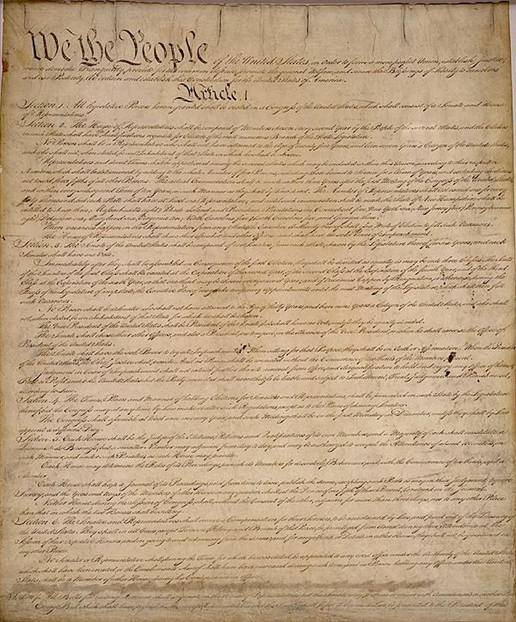
The 1787 Constitution scored roughly 96% AI on GPTZero in an April 2023 test. First page via Wikimedia Commons (public domain).
Why it happened
GPTZero’s founder Edward Tian gave a clean explanation. The Constitution appears so often in the data used to train large language models that the models have effectively memorised its cadence. Its wording is therefore extremely predictable, the exact low-perplexity signature a detector reads as AI.
In other words, the tool was not broken. It was doing precisely what it was designed to do, and that design mistook one of the most human documents ever written for the work of a machine.
The lesson
Famous, formal, or heavily edited human writing can be statistically indistinguishable from AI to these tools. A confident percentage is a measurement of predictability, not a proof of authorship, and treating it as proof is how real people get wrongly accused.
The main detection tools, briefly
A handful of tools dominate the market. Here is what each one is, how it works, and where it tends to fall down.
GPTZero - Built for teachers
Launched in 2023 by Edward Tian and aimed squarely at educators. It leans on perplexity and burstiness and highlights the specific sentences it finds suspicious. It is popular and free to try, but the very design that made it famous is also what flagged the Constitution.
Turnitin AI Writing Detection - Bundled with plagiarism checks
Bolted onto the plagiarism service most universities already run, so it reaches millions of students by default. Turnitin claims a false-positive rate under 1%, but that figure mainly applies to heavily AI documents, and dozens of institutions (Vanderbilt among the first) have switched it off over accuracy, fairness, and a lack of transparency about how it decides.
Originality.ai - Built for web publishers
Targeted at SEO teams and content agencies rather than classrooms. It is deliberately aggressive, which lowers missed AI but pushes false positives up, and independent tests have seen its miss rate swing widely between text samples.
Copyleaks - Enterprise and multilingual
Markets high headline accuracy and support for many languages, which makes it common in business settings. Like every detector, its numbers fall sharply the moment text has been edited or run through a paraphraser.
Pangram - Newer, precision-first
A more recent entrant designed around keeping false accusations near zero rather than catching every last case. In head-to-head studies it has posted markedly lower false-positive rates than older tools, which hints at where serious detection is heading.
The tools compared on one line each
| Tool | Main audience | Core method | Notable strength | Key limitation |
|---|---|---|---|---|
| GPTZero | Educators | Perplexity and burstiness | Sentence-level highlighting | Flags formal human text |
| Turnitin | Universities | Trained classifier | Already inside grading tools | Opaque, disabled by many schools |
| Originality.ai | Web publishers | Trained classifier | Catches more AI | Higher false-positive rate |
| Copyleaks | Enterprise | Trained classifier | Many languages supported | Weak on edited text |
| Pangram | Mixed | Newer deep model | Very low false positives | Less independent track record |

In practice a detector is one text box and one number, which is exactly why the number gets over-trusted.
Why detectors get honest writing wrong
The failures are not random noise spread evenly across everyone. They land hardest on specific groups, which is what turns a technical flaw into a fairness problem.
Non-native English writers
A Stanford study found that seven popular detectors flagged around 61% of essays by non-native English speakers as AI, against almost none of the native-speaker essays. Simpler vocabulary and steadier sentence rhythm read as the low-perplexity pattern the tools punish.
Neurodivergent and formulaic writers
Students with autism, ADHD, or dyslexia, and anyone drilled in a rigid five-paragraph template, can trip the same wires. Consistent structure is a virtue in a classroom and a red flag to a detector.
The people caught are often the honest ones
Meanwhile, a determined cheat can defeat most detectors with light editing or a paraphrasing pass that drops accuracy dramatically. The result is backwards, because the writers most likely to be flagged are frequently the sincere ones, not the rule-breakers.
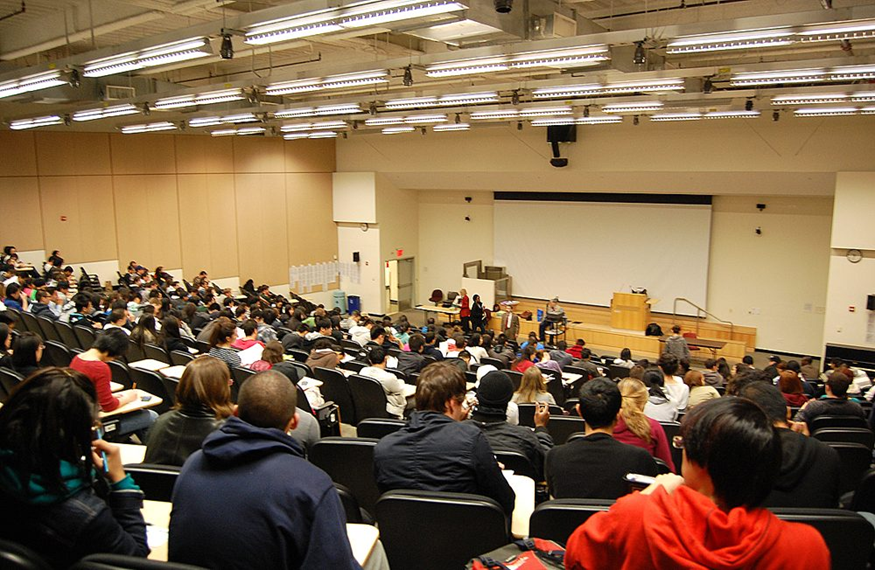
Vanderbilt calculated that even a 1% false-positive rate would wrongly flag about 750 of its 75,000 annual submissions, and then disabled the tool.
8. How to use AI detectors responsibly
None of this means the tools are useless. It means they belong in a specific, limited role. If you have to use one, work through these steps in order.
Step 1: Treat the score as a signal, not a verdict
A high percentage is a reason to look closer, nothing more. It can open a conversation, but it should never close one on its own.
Step 2: Never act on a single number
Before any accusation, gather corroborating evidence such as earlier drafts, edit history, notes, and a direct conversation with the writer. One tool’s output is not a case.
Step 3: Check the context that inflates errors
Ask whether the text is short, written by a non-native English speaker, or highly formulaic. Each of those conditions is known to raise false positives, so weight the score accordingly.
Step 4: Ask the writer to show their process
Someone who wrote the work can almost always reconstruct how they got there. A version history or a five-minute conversation reveals far more than any detector.
Step 5: Prefer prevention over policing
Process-based assignments, oral check-ins, and clear disclosure rules beat an arms race with a tool that both sides can already game. Design the task so the number matters less.
The bottom lineCan AI detectors be trusted? As a rough signal, sometimes. As proof, no. They can flag a passage that is worth a second look. They cannot reliably tell you who or what wrote something, and they fail in patterns that are both predictable and unfair, hitting non-native and neurodivergent writers hardest while the determined cheat slips past. Remember that even OpenAI could not make one work well enough to keep it online. That is the single most honest data point in the whole debate. Use a detector the way you would a smoke alarm, a prompt to go and check, never a confession. The moment its number is allowed to decide a grade, a job, or a reputation by itself, it is being trusted with a job it simply cannot do. |
Discussion 0
More posts
QuillBot on the free plan: what runs and what stops at the wall
A paraphraser, a grammar checker, and an AI detector in one place. Here is the walkthrough, what each tool does, and the...

ChatGPT or Claude for Writing? A Practical Comparison for 2026
Both assistants can draft a blog post in seconds. The real question is which one leaves you with less editing, holds you...
The best AI for writing in 2026: which tool for which job
There is no single best AI for writing anymore. There is a best one for prose, a best one for research, a best one for e...
Please log in or create an account to join the discussion.