What a content pillar is, and everything it quietly stands for.


The term carries two different jobs in two different rooms. This reference separates them, connects them, and explains every part in full, including the load-bearing details most guides skip.
DEFINITION
THE LOAD BEARING IDEA
A content pillar is a core, load bearing piece of your content strategy that other content is built around. Instead of publishing a scattered pile of unrelated pieces, you organize everything around a small number of central supports, and every new piece attaches to one of them. In everyday use the phrase points to one of two specific things: a single comprehensive page that owns a broad topic and links out to narrower pages, or a recurring theme a brand publishes against again and again. Different teams run them, but both rest on the same belief, which is that content organized around a center performs better than content that merely accumulates.
The metaphor is architectural on purpose, and it is worth taking literally. A pillar in a building bears weight; remove it and the roof does not float, it falls. A content pillar does the same job for a body of work. It concentrates authority in one place, gathers related material around itself, and gives both readers and search engines an obvious center of gravity for a subject. Without that center your content still exists, but it stands as a heap rather than a building.
Why does the center matter so much? Because attention, links and rankings are scarce, and scattered content forces your own pages to compete for them. Two half finished posts on one topic split the traffic, split the links, and blur what you actually know. One strong pillar, supported by focused pieces that point to it, pools those resources instead of dividing them. That pooling is the entire mechanical advantage of the approach.
The scale of the problem is measurable. In a widely cited Ahrefs study of roughly 14 billion pages, 96.55 percent received no traffic from Google at all, and only 1.94 percent attracted between one and ten monthly visits. Pillars exist to keep your pages out of that silent majority, by concentrating enough authority in one structure to clear the visibility threshold.
WORKING DEFINITION A content pillar is the central asset or theme that organizes a body of related content, so that individual pieces reinforce one another instead of competing for the same attention, links, and rankings. |

THE TWO MEANINGS
ONE TERM, TWO ROOMS
Most confusion around content pillars traces to a fact few guides state plainly: the phrase names two related but separate concepts, and people rarely say which one they mean. In a planning meeting, a search marketer hears content pillar and pictures a long, authoritative page that will rank for a broad term and anchor a set of supporting articles. A social media manager hears the same words and pictures a recurring theme that will shape the posting calendar for months. Both are using the term correctly. They are also talking past each other, and the project that results will disappoint at least one of them.
The cure is to name the sense out loud. Say pillar page when you mean the SEO asset. Say content theme when you mean the strategic bucket. The schedule below puts the two side by side so the differences are impossible to miss.
| ATTRIBUTE | PILLAR PAGE, THE SEO SENSE | CONTENT THEME, THE STRATEGY SENSE |
|---|---|---|
| WHAT IT IS | A published page covering one broad topic in depth | A subject area the brand returns to repeatedly |
| HOW MANY | One page per topic, refreshed over time | Usually three to five themes per brand |
| PRIMARY GOAL | Rank, earn links, organize a topic cluster | Keep messaging focused and consistent |
| LIVES ON | Your website or blog | Any channel, often feeds and newsletters |
| MEASURED BY | Rankings, traffic, links, cluster coverage | Consistency, reach, engagement, recall |
| OWNED BY | SEO and content teams | Brand, social, and editorial teams |
SCHEDULE A. THE TWO SENSES OF CONTENT PILLAR, COMPARED ATTRIBUTE BY ATTRIBUTE.
This pillar covers both senses at readable altitude and hands every deep dive to a numbered cluster page. The full map of those fifteen clusters, each with a proposed blog title, lives on the companion sheet, the cluster map document.
SENSE ONE, THE PILLAR PAGE
THE FRONT DOOR TO A TOPIC
A pillar page is a long, structured page that covers a broad topic comprehensively and anchors a set of related pages. It is the front door to everything you have to say about a subject. If your business teaches email marketing, the pillar is the complete guide that answers the broad question at a readable altitude, then hands deliverability, list building, subject lines and automation to focused pages of their own.
The word to hold onto is comprehensive. A reader who lands on the pillar should feel they have found the definitive resource, not one more partial article. That sense of completeness is what makes people stay, link, and return, and those behaviors are exactly what search engines reward.
Length alone does not make a pillar. Three properties, present together, do. Breadth over depth at the top: the pillar maps the whole territory and deliberately delegates the microscope work to cluster pages. Structural linking: the pillar links to every cluster page and every cluster links back, which is the mechanism that turns separate posts into one recognizable structure. Durability: a pillar targets a broad, stable query that stays relevant for years, so you update it rather than retire it.
A compressed worked example: a personal finance site picks retirement planning. The pillar walks the whole subject from the top, why it matters, the account landscape, how much to save, how the pieces fit. When it reaches account types, it summarizes and links to the dedicated cluster page, and does the same for contribution limits, withdrawal strategies and tax basics. Readable overview in the middle, deep dives around it, links running both ways.
Pillar pages come in a few recognizable shapes, a teachable guide, a curated hub, or a definitional page like this one, and choosing the right shape saves real rework. The formats, and the nine stage build from head topic to publish, each moved to their own cluster.
THE CLUSTER ENGINE
WHY THE PILLAR NEVER WORKS ALONE
The pillar sits at the center of a topic cluster: the hub, the spoke pages around it, and the link fabric between them. Three compounding effects make this structure outperform standalone pages. First, internal links circulate authority, so a strong pillar lifts its clusters and a popular cluster lifts the pillar back, a small economy where value circulates instead of leaking away. Second, clear topical grouping makes your site legible to ranking systems that now parse topics and relationships rather than isolated keywords. Third, assigned roles end internal competition, because two of your own pages chasing the same query split clicks and signals until neither ranks as well as one focused page would.
The mechanism is not theoretical. HubSpot, which popularized the model, reported in its original topic clusters research that the more interlinking its teams did, the better their placement in search results became, with impressions rising alongside the number of links. Google's own documentation on links makes the complementary point, recommending descriptive anchor text so that both readers and systems understand what a linked page is about before anyone clicks.
How many clusters per pillar? Any fixed number is a guess, and the honest range for most topics is five to twenty. Below five, the topic probably was not broad enough to justify a pillar and you are better off with one good page. Far above twenty, you are likely looking at several pillars wearing a single trenchcoat, and splitting them serves readers and search engines better.
The full mechanics of the model, and the link fabric details that make or break it, descriptive anchor text, shallow link depth from the home page, and sideways cross beams between related clusters, each earned a dedicated cluster page.
SENSE TWO, THE CONTENT THEME
THE BUCKETS A BRAND PUBLISHES FROM
In content strategy and social media, a content pillar is a recurring theme a brand organizes its publishing around, a category of message rather than a page. A skincare brand might run four: skin science education, product spotlights, customer stories, and behind the scenes. Every post belongs to one bucket, which keeps a feed varied without letting it wander into randomness.
Themes solve a very human planning problem. A calendar with no themes drifts toward whatever felt urgent that week, and the account slowly loses any recognizable identity. Fixed buckets do three useful things at once. They make ideation faster, because the question shifts from what should we post to what is the next fresh angle on a known theme. They keep the mix visibly balanced, because a neglected bucket is easy to spot. And they build recognition, because audiences come to trust brands that behave predictably, the way they trust a favorite show to deliver a certain kind of episode.
The discipline pays precisely because it is rare. In the Content Marketing Institute's Outlook for 2025 benchmarks, fewer than half of B2B marketers had a documented content strategy at all, and among those who did, only 29 percent rated it as highly effective, with a lack of clear goals the most cited reason. A small set of named themes is the cheapest documented strategy there is.
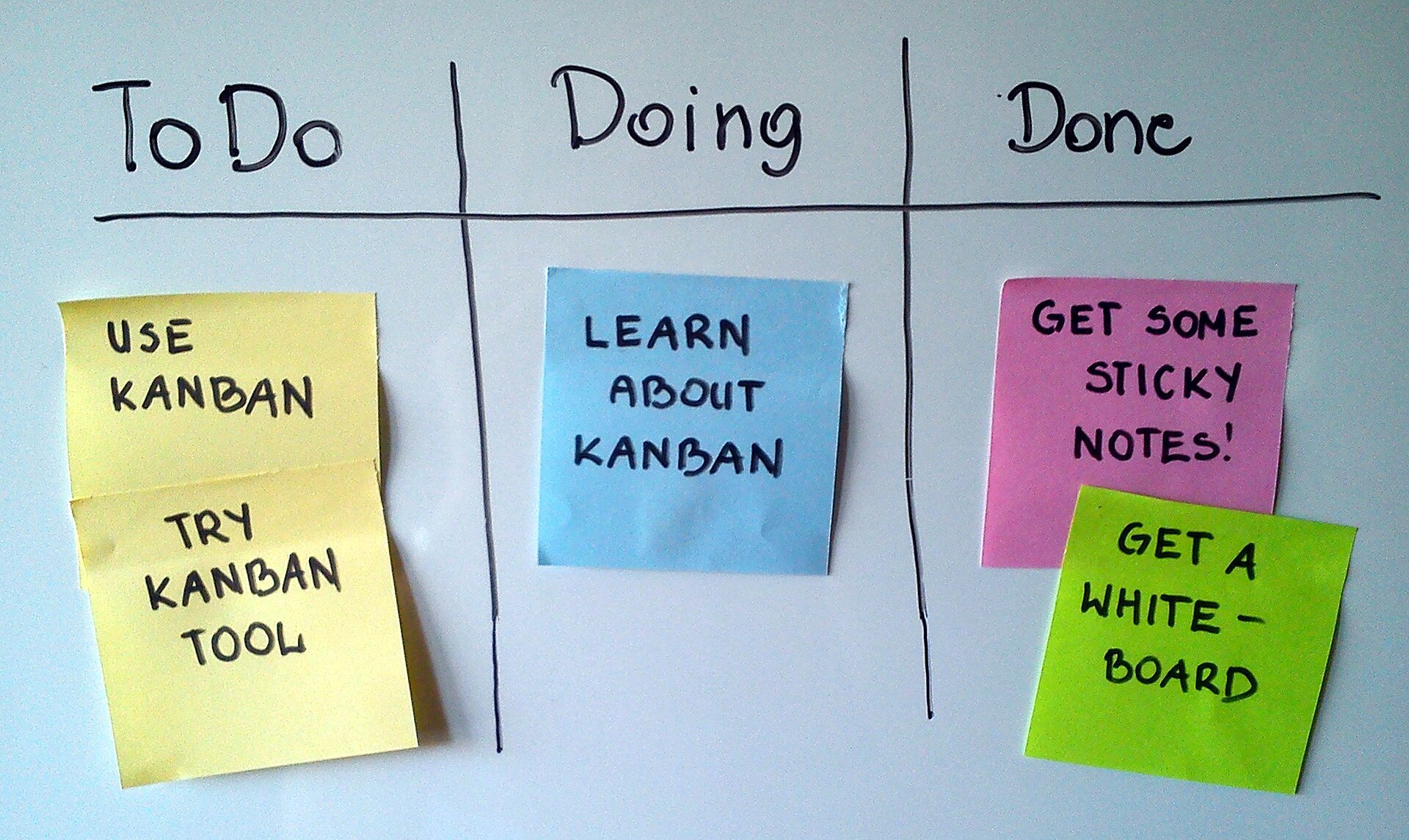
THEMES TURN A BLANK CALENDAR INTO SLOTS TO FILL. PHOTO: JEFF LASOVSKI, WIKIMEDIA COMMONS, CC BY SA 3.0
A widely used starting mix balances four jobs: educate around forty percent of output, connect around twenty five, prove around twenty, and promote around fifteen, tuned by channel and business stage, since a young brand must educate and connect far more than it promotes while an established one can sell more often. The full four pillar model with its ratios, and the social playbook, building a sustainable rotation, keeping pillars separate from formats, and flexing the packaging per platform, moved to their own clusters.
THE BRIDGE
WIRING THE TWO MEANINGS INTO ONE SYSTEM
Here is the part most sources leave out entirely. The two meanings of content pillar are not rivals competing for a word by accident. They are two views of the same strategic muscle, one aimed at search structure and one at editorial focus, and they can be deliberately wired together so each feeds the other.
A thematic pillar is a natural source of pillar pages. If education is one of your four social themes, then the biggest, most durable questions inside that theme are exactly the broad topics that deserve a pillar page and cluster on your website. Your themes reveal what you already talk about repeatedly, and anything you find yourself repeating is, by definition, a strong candidate for a permanent, load bearing page.
The relationship runs the other way too. Once a pillar page and its clusters exist, they become a durable content bank your social pillars can draw from indefinitely. A single deep cluster on retirement planning can supply months of educational posts, each one lifting a point from the pillar or a cluster page and reframing it for a feed. You write the deep version once, on your own site, then mine it for lightweight social content for years.
Practically, one planning exercise produces both outputs. Define a theme, list the broad questions living inside it, promote the biggest and most durable to pillar pages, let the medium ones become cluster pages, and let the small or timely ones become social posts. One framework, two kinds of output, and every piece of content traces back to the same small set of supports. The document you are reading is that exercise applied to itself.
CHOOSING PILLARS
THREE FILTERS BEFORE YOU COMMIT
Whether you are picking pillar pages or thematic pillars, the selection logic rhymes, because both are bets about where to concentrate limited effort. Run every candidate topic through three filters. Audience demand: is there real, recurring interest, visible in search volume for a page or in the questions your audience already sends for a theme? Business relevance: does the topic attract the kind of people who might become customers, so attention converts into value? Right to win: do you have genuine expertise, evidence, or an angle that lets you beat what already ranks? Three passes make a pillar worth serious investment. Two make a maybe worth a small test. One makes a distraction dressed up as strategy.
The honesty matters because the odds are unforgiving. Ahrefs' running statistics roundup finds that only 1.74 percent of newly published pages reach the top ten results for even one keyword within a year. The filters exist to spend your effort where that small minority is actually reachable.
Sizing has an equally simple test. If a topic has no natural subtopics, it is a cluster page, not a pillar, and belongs under something broader. If it would take a small encyclopedia to cover honestly, it is several pillars and should be split. The full selection method, including the cannibalization audit to run before you build anything and a copyable definition worksheet, lives in its own cluster.
KEEPING IT STANDING
SEARCH, MACHINES, MEASUREMENT, MAINTENANCE
Pillars became popular for a concrete reason: search rewards topical depth. A site with a well built pillar and a dozen interlinked clusters on one subject hands ranking systems strong evidence of real expertise. That accumulated evidence is topical authority, and it lifts the whole cluster rather than one lucky page. Intent completes the picture: the pillar answers the broad, orienting query while each cluster answers a precise one, which is exactly what stops your own pages from colliding at the same search.
AI search raises the stakes rather than replacing them. Answer engines compose responses from many pages, and they favor sources that are organized, unambiguous, and easy to extract. The goal shifts from ranking first to being referenced and cited, and a clean pillar with direct answers placed early is built for precisely that job.
An investment this size deserves matching measurement, and the metrics differ by sense: rankings, links, and cluster wide traffic for pages; reach, balance, and recognition for themes. One rule bears repeating either way: measure the cluster, not just the pillar, because a modest looking hub can quietly power significant results across everything around it.
Finally, a pillar is a commitment, not a launch. Content decay erodes even excellent pages as facts age, competitors improve, and intent shifts, so put every pillar on a refresh cycle and prune the sprawl of overlapping clusters that accumulates over the years. Durability is also where the payoff hides: the same Ahrefs roundup notes that 72.9 percent of pages ranking in Google's top ten are more than three years old, which is precisely the age a maintained pillar is built to reach. At scale, hold the whole structure together with governance: a living pillar map, a named owner per pillar, and an intake step that checks each new idea against the map before it is commissioned. Each of these five disciplines has its own cluster below.
FIELD NOTES
FAILURES, EXAMPLES, AND VOCABULARY
The ways pillars fail are consistent enough to catalogue, which is good news, because a mistake you can name is one you can avoid: length mistaken for a pillar, topics too narrow or too broad, weak internal linking, thin clusters built to game authority, set and forget maintenance, and pillars confused with formats. Each failure pairs with a known fix in its own cluster. To see the model wearing different clothes, from SaaS to home heating, the industry examples cluster shows the same hub and spoke shape across five sectors. And when the surrounding vocabulary blurs, cluster page, cornerstone content, category, series, format, the glossary cluster draws the lines cleanly.
THE LOAD PATH
TRACE EVERY PIECE TO A SUPPORT
In a building, engineers trace the load path: the route weight travels from roof to beam to pillar to ground. Do the same for content. Every post should trace to a cluster, every cluster to a pillar, and every pillar to something the business can credibly own. If a piece has no path, it is decoration, and decoration is the first thing to cut.
This reference used to carry six thousand words of load on a single page. Now the pillar carries the overview, fifteen clusters carry the depth, and the links carry the weight between them. That is what a content pillar is, and everything it quietly stands for.
Discussion 0
More posts

How to Find and Fix Keyword Cannibalization
Keyword cannibalization is what happens when two or more of your own pages chase the same search query. Instead of compe...
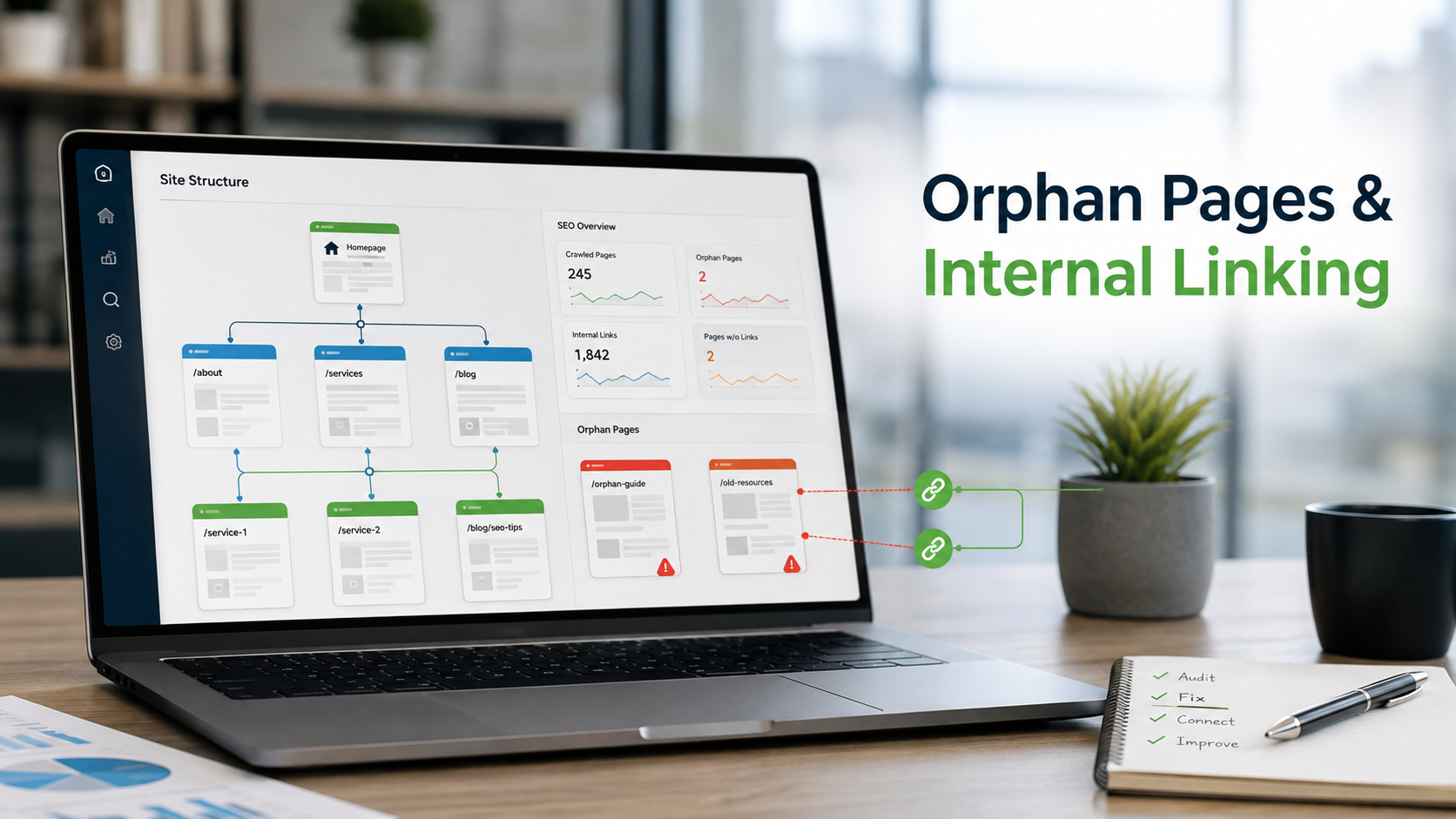
How to Find Orphan Pages and Fix Your Internal Linking
Every page on your site should be reachable through at least one link. When it is not, search engines struggle to find i...
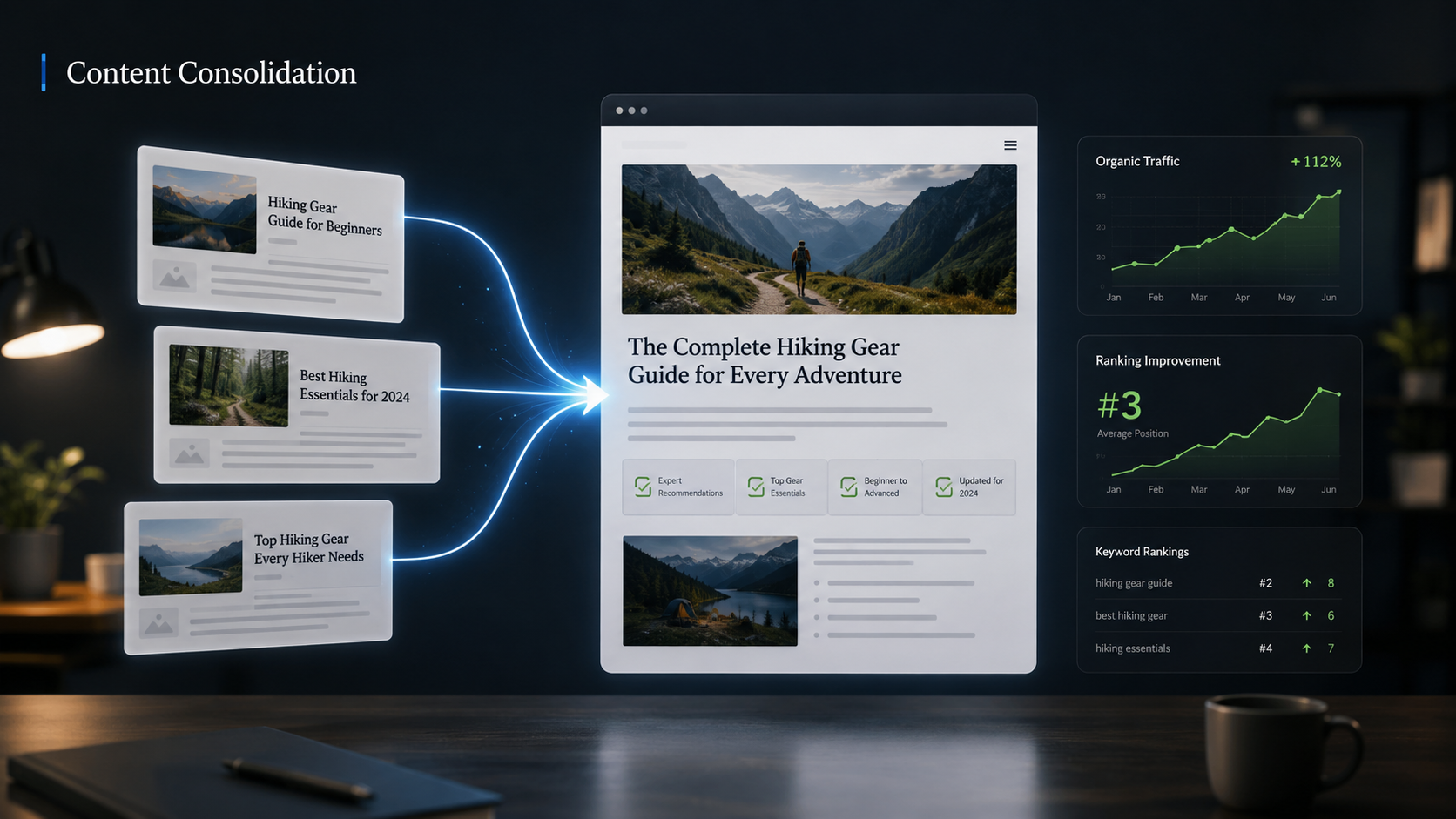
Content Consolidation: When to Merge Competing Articles
When two or three of your own pages chase the same topic, they compete with each other instead of the rest of the web. H...
Please log in or create an account to join the discussion.