Topical Authority: Why Covering a Subject Completely Lifts Every Page


A single strong article can rank. A subject covered in full builds something sturdier, a reputation that raises every page underneath it at once.
Most sites treat pages as separate bets. One post targets a keyword, another chases a different one, and each is judged on its own. Topical authority works the other way around. It treats a subject as a single thing you either own or you do not, and it rewards the sites that cover that subject completely rather than in scattered fragments.
The payoff is not limited to the one page you happen to be improving. When a search engine decides that your site is a genuine authority on a topic, that judgment spreads. Pages you have not touched in months start to climb. New pages rank faster because they arrive with the credibility of everything around them. This is the quiet mechanism behind why complete coverage lifts every page, and it is worth understanding in full before you write your next article.
What topical authority actually is
A REPUTATION, NOT A RANKING
Topical authority is the trust a website earns for a subject by covering that subject thoroughly, accurately, and consistently over time. It is not a single metric you can read off a dashboard. It is a judgment that ranking systems assemble from many signals, and it describes the site as a whole rather than any one URL.
The useful comparison is a human expert. You do not trust a doctor because of one good answer. You trust them because they can handle the follow up questions, the edge cases, and the related problems you did not think to ask about. A site with topical authority behaves the same way. It answers the broad question, then it answers the twenty narrower questions that sit underneath it, and it connects them so the whole thing reads as one coherent body of knowledge.
A single page proves you can write about a topic. A complete cluster proves you understand it.
This is why depth beats volume. Ten unrelated posts on ten unrelated subjects tell a search engine very little about what you are qualified to rank for. Ten interlinked posts that map one subject from every angle tell it exactly what you know, and they make the case far more convincingly than any single article could on its own.
Why complete coverage lifts every page
THE COMPOUNDING MECHANISM
The lift is not magic and it is not a bonus that search engines hand out for effort. It comes from three concrete effects that stack on top of one another.
Authority circulates through internal links
When your pages link to one another with clear, descriptive anchor text, they pass signals of relevance and importance between themselves. A strong hub page lends credibility to the narrower pages it points to, and those pages send credibility back. Nothing leaks out to unrelated corners of the web. The value pools inside your own subject, and every page in the group benefits from the strength of the others.
Coverage removes doubt
A lone article on a complex subject leaves obvious gaps. A reader arrives, gets a partial answer, and leaves to find the rest elsewhere. Complete coverage closes those gaps. When your site can answer the next question and the one after that, visitors stay longer, return more often, and cite you more readily. Those behaviors are exactly the ones ranking systems treat as evidence that a source is worth surfacing.
Assigned roles end self competition
Without a plan, two of your own pages often chase the same query. They split clicks, split links, and blur the signal until neither ranks as well as a single focused page would. Complete coverage assigns each page a distinct job. The broad page owns the broad query, and each supporting page owns a precise one. Your pages stop colliding, and the whole set climbs.
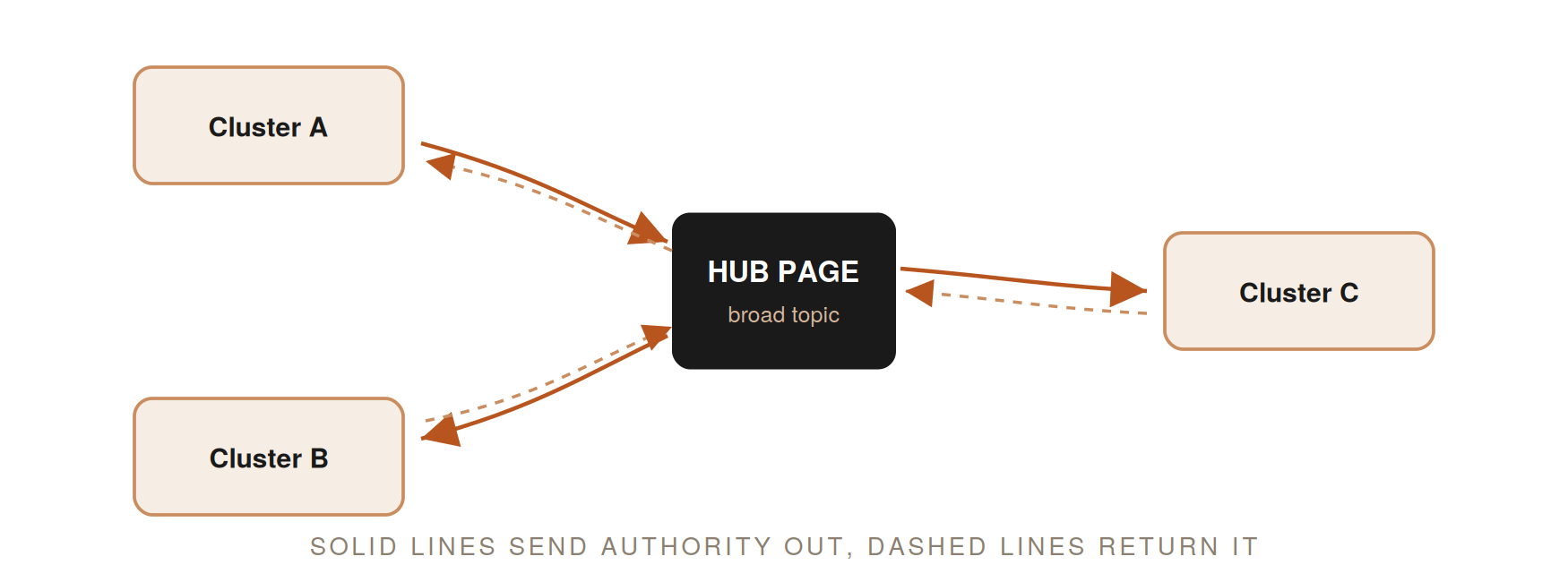
Figure 1. Internal links keep authority circulating inside the subject instead of leaking away.
THE SHORT VERSION Complete coverage turns a pile of competing pages into a connected structure where authority circulates, doubt disappears, and no page fights another for the same result. That structure is what search engines reward, and the reward lands on every page at once. |
How search engines read topical depth
FROM KEYWORDS TO SUBJECTS
Modern ranking systems no longer match strings of text to strings of text. They work with entities, relationships, and intent, which means they try to understand what a page is about and how it fits into a larger subject. A site that covers a topic in full gives these systems an unusually clear picture of expertise, because the relationships between its pages are legible rather than accidental.
Google frames the underlying goal in plain terms through its guidance on creating helpful, reliable, people first content, which asks publishers to demonstrate genuine knowledge and a clear primary purpose rather than assembling pages to chase rankings. The same principle sits behind the framework the industry knows as Experience, Expertise, Authoritativeness, and Trustworthiness, described in Google's own search fundamentals documentation. Complete, connected coverage is simply the most durable way to send those signals, because it reflects real expertise rather than imitating it.
Internal linking is the part that makes the structure readable. Google's documentation on making links crawlable recommends descriptive anchor text precisely so that both readers and systems can understand what a linked page covers before anyone clicks. Descriptive links are the wiring that turns a set of separate posts into one recognizable body of work.
Pillars and clusters, the shape authority takes
WHERE THE STRATEGY BECOMES ARCHITECTURE
Topical authority needs a shape, and the most reliable one is the pillar and cluster model. A broad, comprehensive page sits at the center and covers the whole subject at a readable altitude. Around it, a set of focused pages each handle one narrow slice in depth, and every page links to the center while the center links back to every page.
This structure is not a stylistic choice. It is the physical form that topical authority takes on a website, and it is the reason a well built hub can lift results across everything connected to it. If you want the full mechanics of how that central page is chosen, built, and maintained, this companion guide on what a content pillar is and everything it quietly stands for walks through the model in detail, including how the two meanings of the term fit together into a single system.
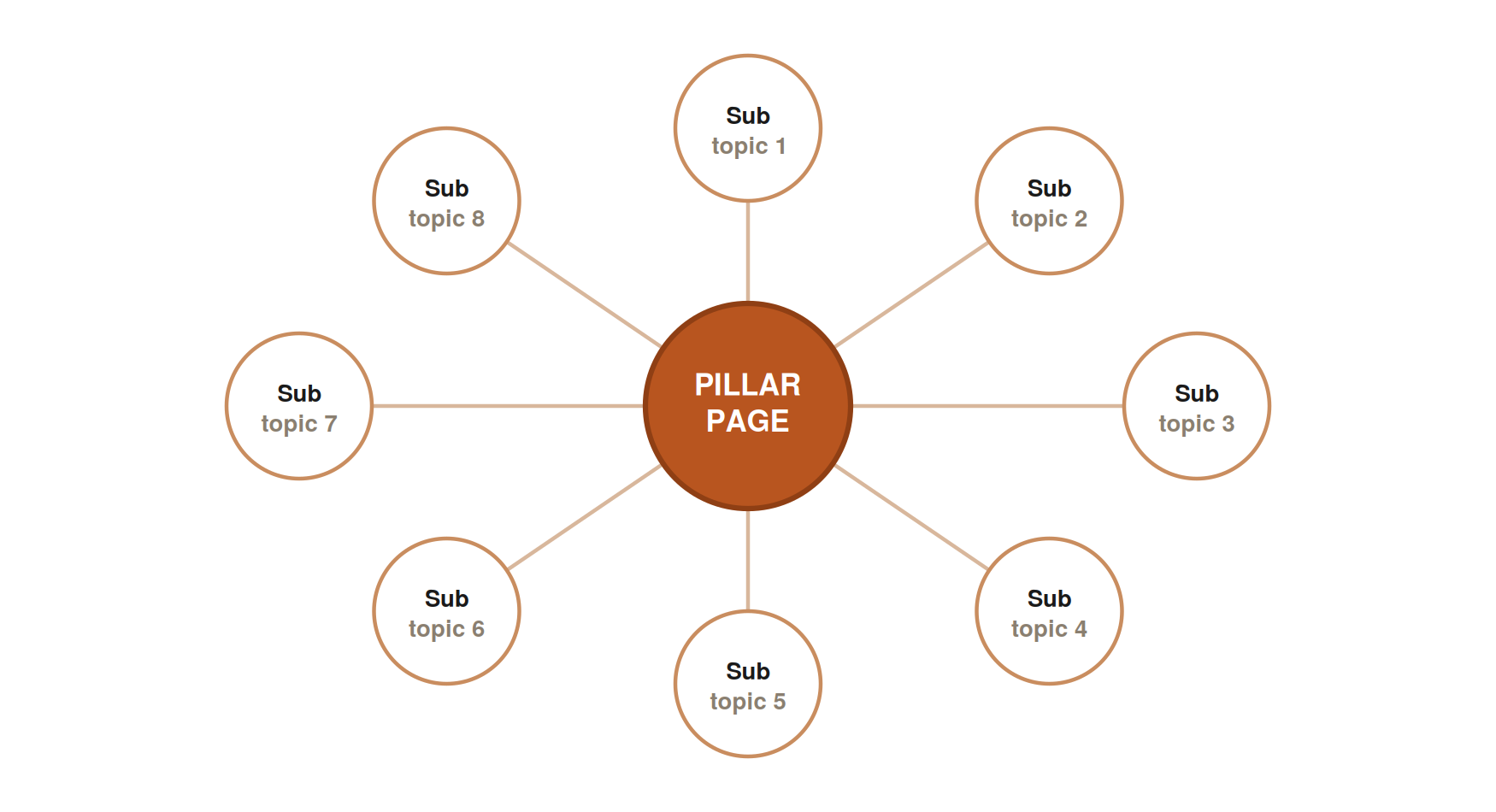
Figure 2. The pillar and cluster model, a comprehensive hub surrounded by focused supporting pages, all linked both ways.
The relationship between authority and structure runs in both directions. A clear structure earns authority, and accumulated authority makes the structure more powerful, so the two reinforce each other the longer you maintain them.
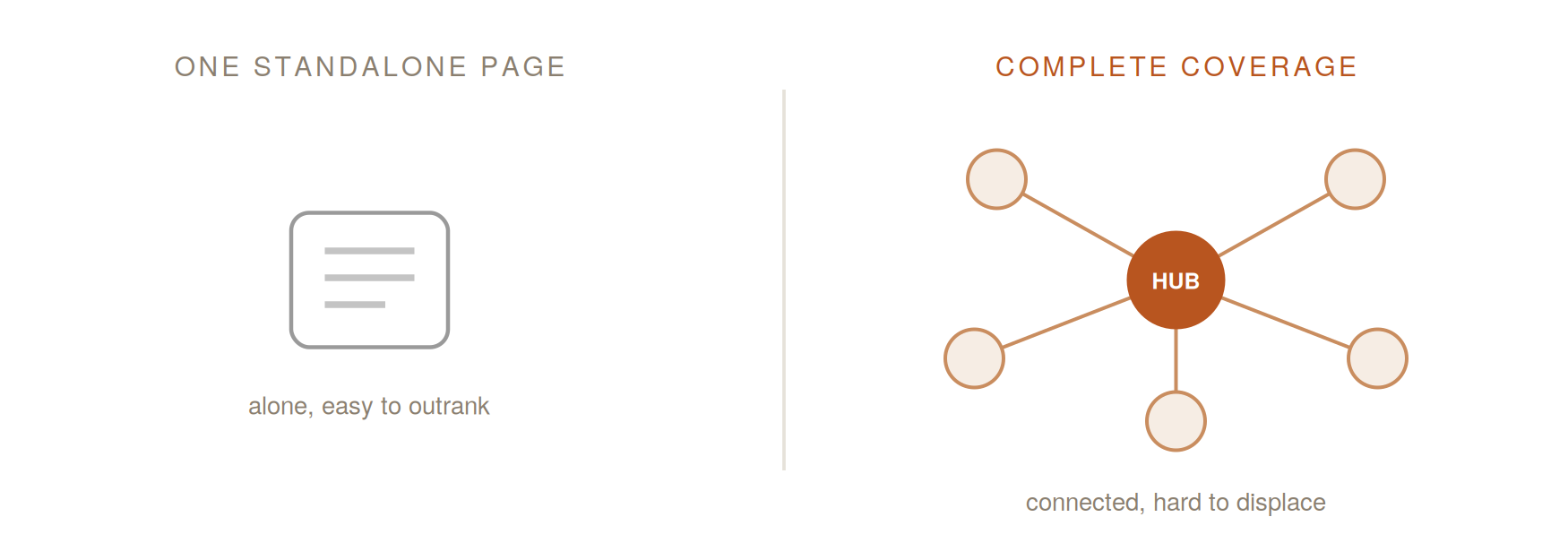
Figure 3. A lone page stands on its own. Complete coverage builds a structure that lifts every page inside it.
| DIMENSION | ONE STANDALONE PAGE | COMPLETE TOPICAL COVERAGE |
|---|---|---|
| Scope | Answers a single query | Answers the broad query and every narrow one beneath it |
| Signal to search | Proves competence on one point | Proves expertise across the whole subject |
| Internal links | Few, often to unrelated pages | Dense, purposeful, and subject specific |
| Effect of a win | Lifts that one page | Lifts the hub and every connected page |
| Durability | Fragile, easy to outrank | Compounding and hard to displace |
Table 1. A single strong page compared with complete topical coverage.
Building topical authority on purpose
A REPEATABLE SEQUENCE
Authority is built, not stumbled into. The sequence below turns the idea into a plan you can actually run.
1. Choose a subject you can credibly own
Pick a topic with real audience demand, genuine relevance to your business, and a fair chance that you can beat what already ranks. A subject that fails all three is a distraction dressed up as strategy.
2. Map the full territory
List every question a knowledgeable reader might ask about the subject, from the broad orienting one down to the small specific ones. This map becomes your table of contents for the whole cluster.
3. Build the central hub
Write the comprehensive page that covers the subject from the top and delegates each detailed slice to a supporting page. Breadth belongs here, depth belongs in the clusters.
4. Fill in the supporting pages
Give each narrow question its own focused page. One clear job per page keeps your own content from competing with itself.
5. Wire everything together
Link the hub to every supporting page and every supporting page back to the hub, using descriptive anchor text so the relationships are obvious to readers and systems alike.
6. Maintain the structure over time
Refresh pages as facts age, prune overlapping content, and keep a living map so new ideas attach to the right support instead of sprawling loose.
Measuring whether it is working
READ THE CLUSTER, NOT THE PAGE
The single most common measurement mistake is judging a topical strategy by the performance of one page. The whole point of complete coverage is that the value spreads, so the value has to be measured across the whole group.
| SIGNAL | WHAT A HEALTHY TREND LOOKS LIKE |
|---|---|
| Cluster traffic | Total visits across the hub and all supporting pages rising together |
| Keyword coverage | The site ranking for a widening set of related queries, not just one |
| New page speed | Fresh pages in the subject ranking faster than pages in unfamiliar subjects |
| Earned links | Other sites citing the hub and its supporting pages as a reference |
| Return visits | Readers coming back and moving between connected pages in a session |
Table 2. Signals worth watching as authority builds.
When these move in the right direction together, you are watching topical authority accumulate. A modest looking hub can quietly power significant results across everything around it, which is exactly why the cluster, not the page, is the unit worth measuring.
Common ways the strategy goes wrong
MISTAKES WORTH NAMING
Most failures are predictable, which is good news, because a mistake you can name is one you can avoid. Coverage that stops halfway leaves the gaps that send readers elsewhere. Supporting pages so thin they add nothing dilute the whole structure rather than strengthening it. Weak or generic internal linking hides the relationships that make a cluster legible. And treating the work as a launch rather than a commitment lets content decay quietly undo months of gains.
The fix for every one of these is the same discipline that built the authority in the first place. Cover the subject in full, connect the pieces clearly, and maintain the structure as a living thing rather than a finished project.
The takeaway
OWN THE SUBJECT, LIFT THE SITE
Topical authority reframes the entire question of what you are trying to rank. You are not trying to win a page. You are trying to earn a reputation for a subject, and that reputation, once earned, raises every page that carries it.
Complete coverage is how you earn it. Map the subject in full, build a hub that owns the broad question, surround it with focused pages that own the narrow ones, and wire the whole thing together so authority circulates instead of leaking away. Do that, and you stop betting on pages one at a time. You build something that lifts all of them at once.
Discussion 0
More posts
How to Find and Fix Keyword Cannibalization
Keyword cannibalization is what happens when two or more of your own pages chase the same search query. Instead of compe...
How to Find Orphan Pages and Fix Your Internal Linking
Every page on your site should be reachable through at least one link. When it is not, search engines struggle to find i...
Content Consolidation: When to Merge Competing Articles
When two or three of your own pages chase the same topic, they compete with each other instead of the rest of the web. H...
Please log in or create an account to join the discussion.