How to Build Conversion Paths Across a Topic Cluster

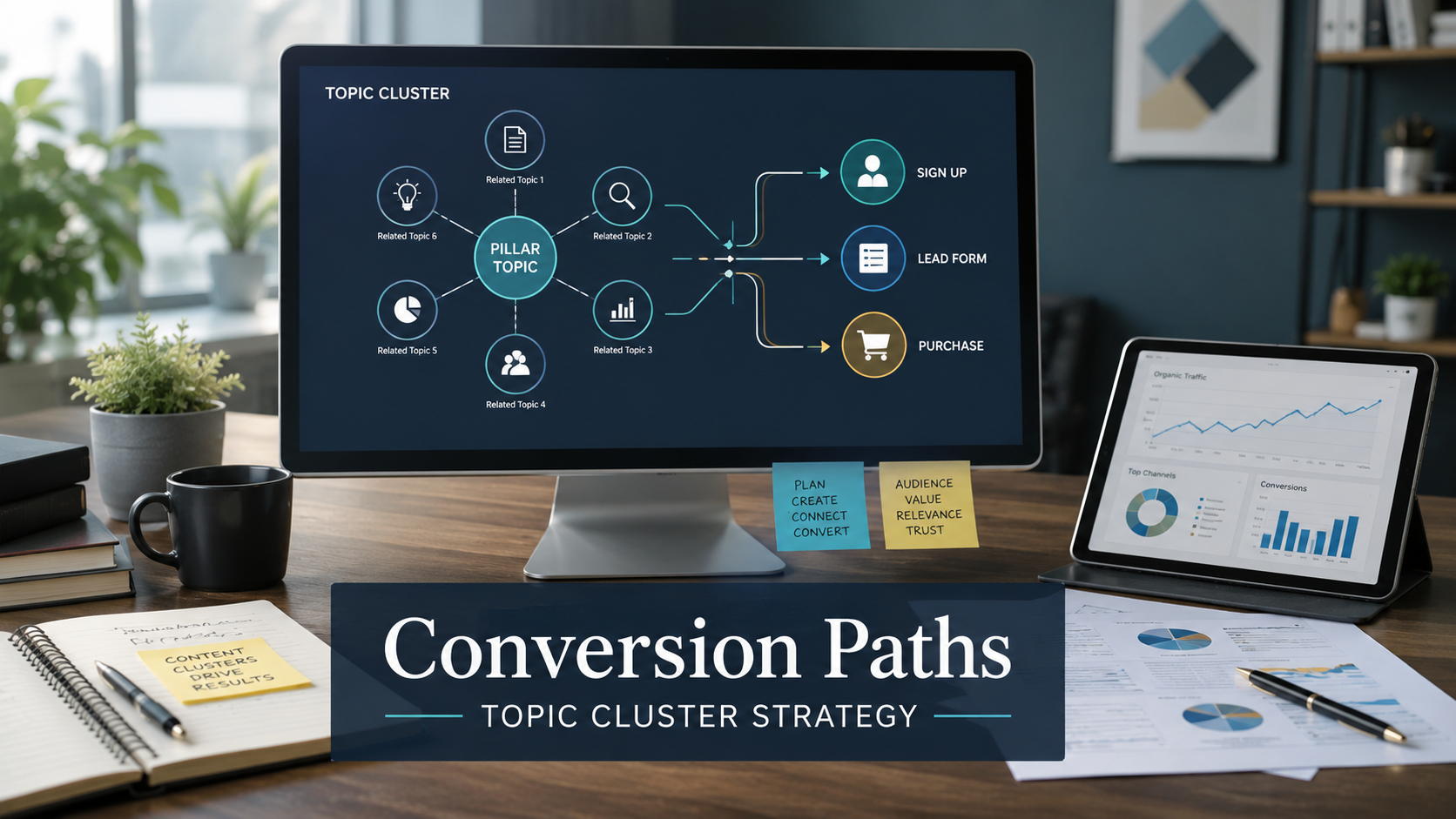
A cluster is built to be found. A conversion path is built to be followed. Here is how to lay routes across the whole cluster so a visitor who lands anywhere can find a way to the next step.
Most topic clusters get one job right and skip the other. Pages rank, traffic climbs, and then almost everyone leaves the way they arrived. The interlinking that pulled them in did nothing to move them onward.
That missing layer is the conversion path: the route that carries a reader from whatever page they landed on toward an action worth measuring. If you have not built the structure itself yet, start with the pillar page at the center of the cluster, then come back here to wire it for conversion.
Stage 01
Define a conversion path
A conversion path is the route a reader travels from the page they land on to the step you want them to take. That step might be a signup, a booking, a trial, or a reply. The path is everything in between, meaning the links they follow, the prompts they meet, and the order it all happens in.
It helps to separate the path from the funnel. A funnel is your model of intent, moving from first awareness toward a decision. Nielsen Norman Group sets this out clearly in its work on customer journey mapping, which plots what a person thinks and feels at each phase. A conversion path is how that journey gets expressed inside one cluster, page by page and link by link.
So a path always has a start, a set of stops, and a destination. Miss any of the three and the reader stalls.
Stage 02
Why clusters need paths, not just links
Interlinking is what turns a set of pages into a cluster. Those links pool authority and signal to search engines that the pages belong together. What they often forget to do is carry intent forward.
A visitor who reads three linked articles and then closes the tab has followed your links and reached no destination. The links moved authority around your site. They did not move the reader anywhere in particular.
The fix is to treat every internal link as doing two jobs at once, passing authority and offering a next step. Google covers the first job in its guidance on crawlable links and descriptive anchor text. The rest of this post is about the second.
Stage 03
Map the cluster before you route it
You cannot plan a route across a map you have not drawn. Start by listing every page in the cluster and tagging each one by the intent it serves.
A simple three way split works well. There are pages that introduce a topic, pages that compare options, and pages that support a decision. The pillar sits above all of them as the interchange that connects everything.
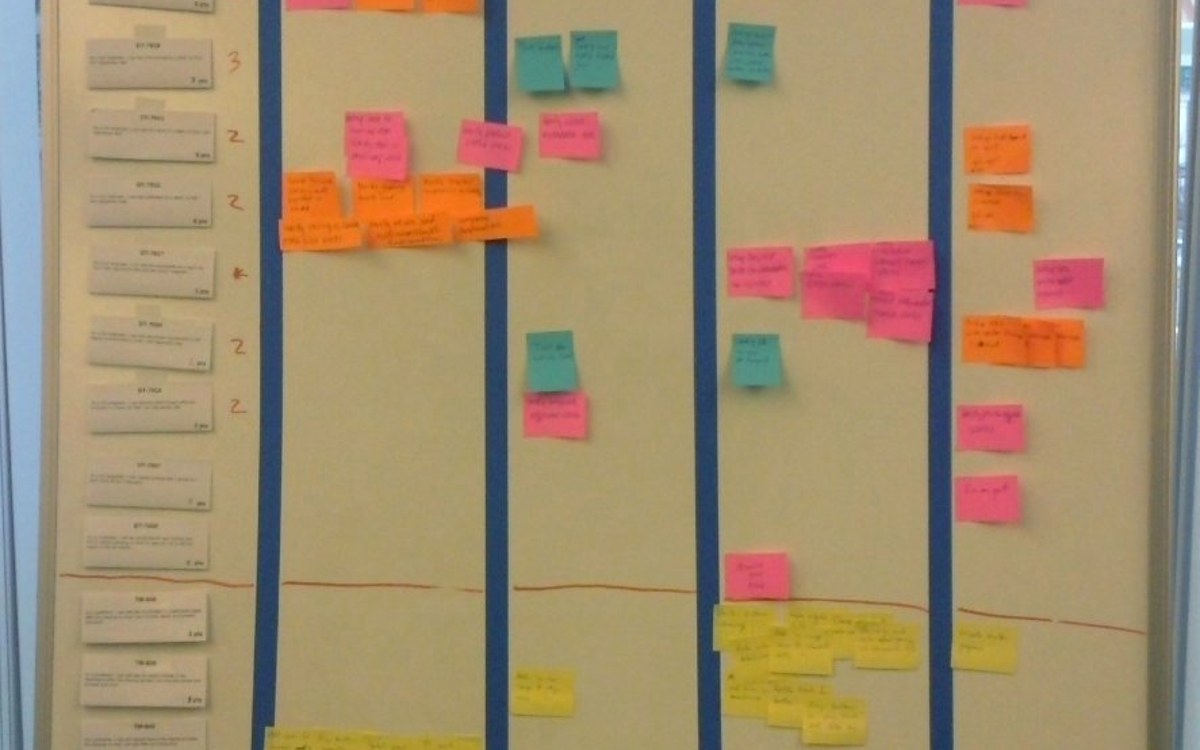
Tag every page before you route it, the way a planning board sorts work into clear columns.
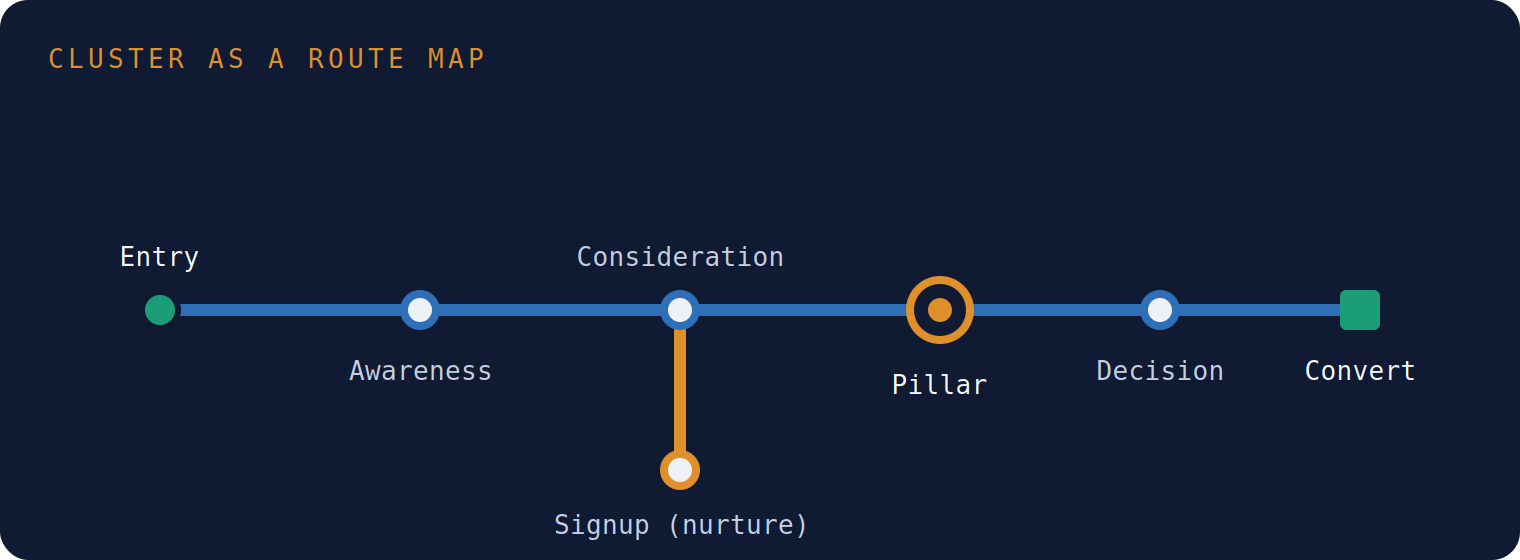
The cluster drawn as a route map: entry, cluster stops, the pillar interchange, a convert terminus, and a nurture spur.
Once every page carries a tag, the gaps show themselves. A cluster with ten awareness pages and no decision page has plenty of interest and nowhere for it to land.
Schedule A. Page role, the intent behind it, and the action that fits.
| Page role | Reader intent | Fitting action |
|---|---|---|
| Pillar page | Orienting, wants the full picture | Point to the most relevant cluster page and one standing offer |
| Awareness cluster | Learning the basics | Offer a guide or a subscription and keep friction low |
| Consideration cluster | Comparing approaches | Offer a template, a checklist, or a worked example |
| Decision cluster | Ready to act | Offer the direct step, whether that is book, buy, or start |
Stage 04
Match the offer to the page
The most common conversion mistake is one offer pasted onto every page. A demo request sitting under a beginner definition asks for a commitment the reader has not warmed up to yet.
Read the tag you gave the page. Awareness pages earn a light exchange, a subscription or a deeper guide. Decision pages can ask for the real thing, because the reader arrived with intent.
| The test: when the offer matches the intent, the prompt reads like help. When it does not, it reads like an interruption, and readers route around interruptions. |
Stage 05
Build the three route types
With pages tagged and offers matched, you can lay actual routes. Three of them cover almost every case in a cluster.
Schedule B. Three routes, when each one earns its place, and where it ends.
| Route | Use it when | Ends at |
|---|---|---|
| Deepen then convert | The reader needs more before acting | An offer on the pillar or a decision page |
| Widen the intent | The reader is on the wrong subtopic | A sibling cluster page that fits better |
| Capture then nurture | The reader is interested but not ready | A low friction signup that continues by email |
Deepen then convert sends a curious reader inward, from a narrow cluster page up to the pillar and on to an offer. Widen the intent moves a reader sideways to a better matched page when the first one missed. Capture then nurture accepts that today is not the day and keeps the relationship open for later.
WORKED EXAMPLE An email marketing cluster in motion Picture a cluster on email marketing. The pillar is a complete guide to the subject. Around it sit cluster pages on subject lines, list building, deliverability, and automation. A reader arrives on the subject lines page from search. They wanted a quick fix and got one. Left alone, they leave. So the page carries one contextual link up to the pillar for readers who now want the full method, and one offer that suits a how to page, a set of subject line templates in exchange for an email. Take the templates and you are on a capture then nurture route. The follow up emails introduce list building and deliverability, each pointing back to its own cluster page. Weeks later the same reader lands on the automation page, a decision stage topic, and meets a direct offer to start a trial. One reader, several visits, three routes doing their separate jobs. No single page did all the work, and a last click report will credit only the automation page, which is exactly why you measure the cluster and not the button. |
Stage 06
Place prompts where attention already is
A link parked at the very bottom of a page reaches only the few readers who finish. Contextual links inside the text reach people at the moment a question forms in their head.
Write anchor text that names the destination honestly. A reader who clicks expecting a checklist and lands on a sales page will not click you a second time.
Keep one clear next step per page. Two competing prompts split attention the same way two of your own pages chasing one keyword split rankings.
Stage 07
Measure the route, not the button
Track which pages start paths, which links get followed, and how often a path reaches its destination. A quiet awareness page that feeds many completed paths is worth more than a page with a high time on page and no way out.
Measure the cluster as one unit. Conversions often begin on a page that never gets credit in a last click report, so judging pages one at a time hides the routes that actually work.
Stage 08
Keep the routes open
Paths break quietly. A merged page orphans the links that pointed at it, and a pruned cluster leaves prompts aimed at nothing. Re-check every anchor target whenever you refresh the cluster.
Give each page one honest route onward and the cluster stops being a collection of articles that happen to rank. It becomes a structure people can move through.
Where paths break most often
The failures repeat across almost every cluster, which is good news, because a fault you can name is one you can fix. Run this list against your own pages before you build anything new.
Schedule C. The common breaks, how they show up, and the fix.
| What breaks | How it shows up | The fix |
|---|---|---|
| Same offer everywhere | Plenty of traffic and almost no signups | Match each offer to the intent of its page |
| No decision page | Interest builds with nowhere to act | Add a page that supports the actual choice |
| Orphaned links | Prompts point at pages you removed | Re-check anchor targets on every refresh |
| Two prompts per page | Readers hesitate and pick neither | Keep one clear next step per page |
| Vague anchor text | Clicks that bounce straight back | Name the destination inside the link |
The takeawayA topic cluster that only ranks is half a machine. It gathers attention and then lets it drain away. The conversion path is the other half, the wiring that turns a visit into a next step. Tag every page by intent, match each offer to that intent, and lay three simple routes across the cluster: deepen, widen, and capture. Put one honest prompt where attention already is, then measure the cluster as a whole rather than judging pages one by one. Do that and every page earns a route onward. A page with no route out is a dead end, and a dead end is the first thing to fix. |
Discussion 0
More posts
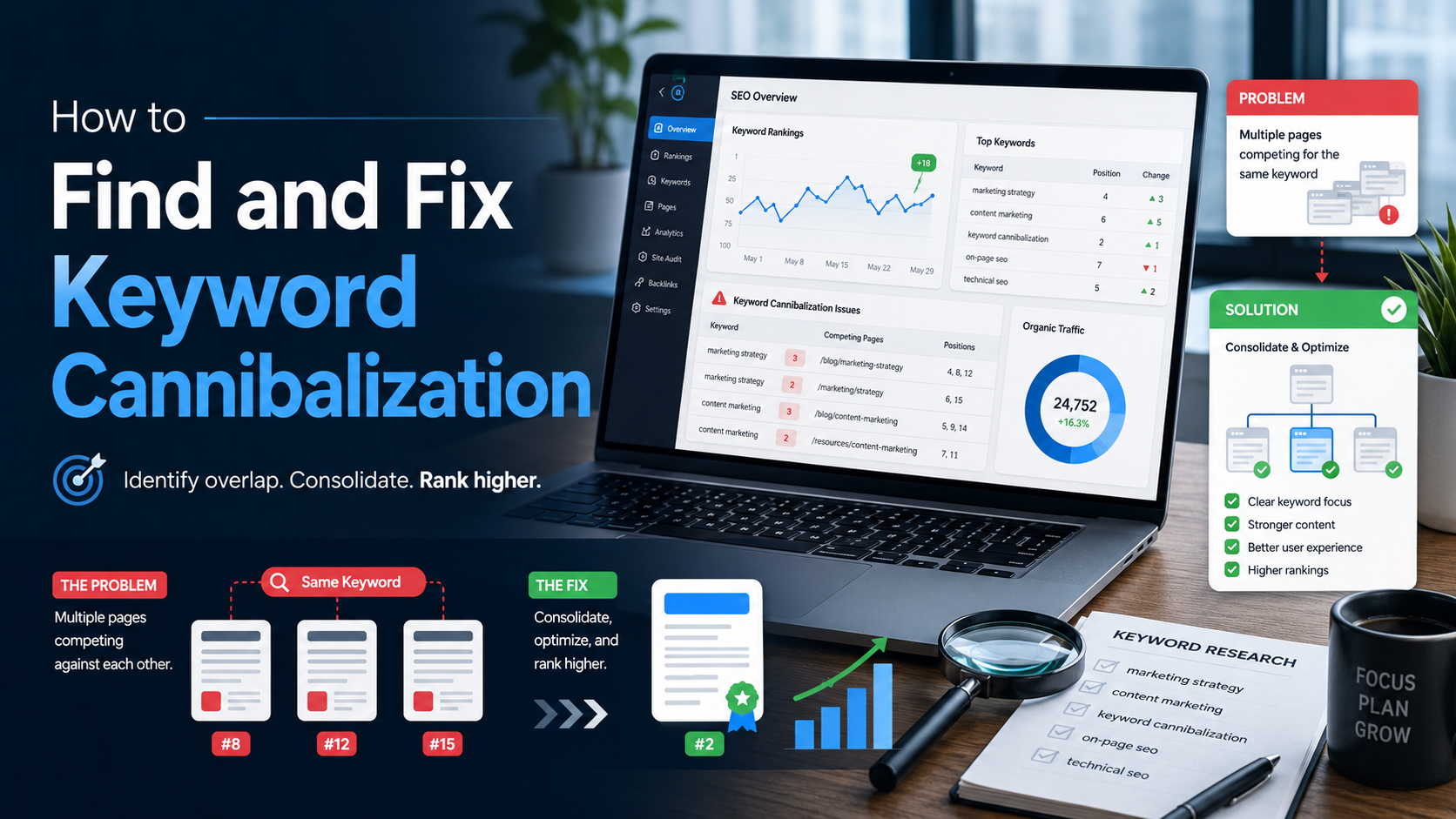
How to Find and Fix Keyword Cannibalization
Keyword cannibalization is what happens when two or more of your own pages chase the same search query. Instead of compe...
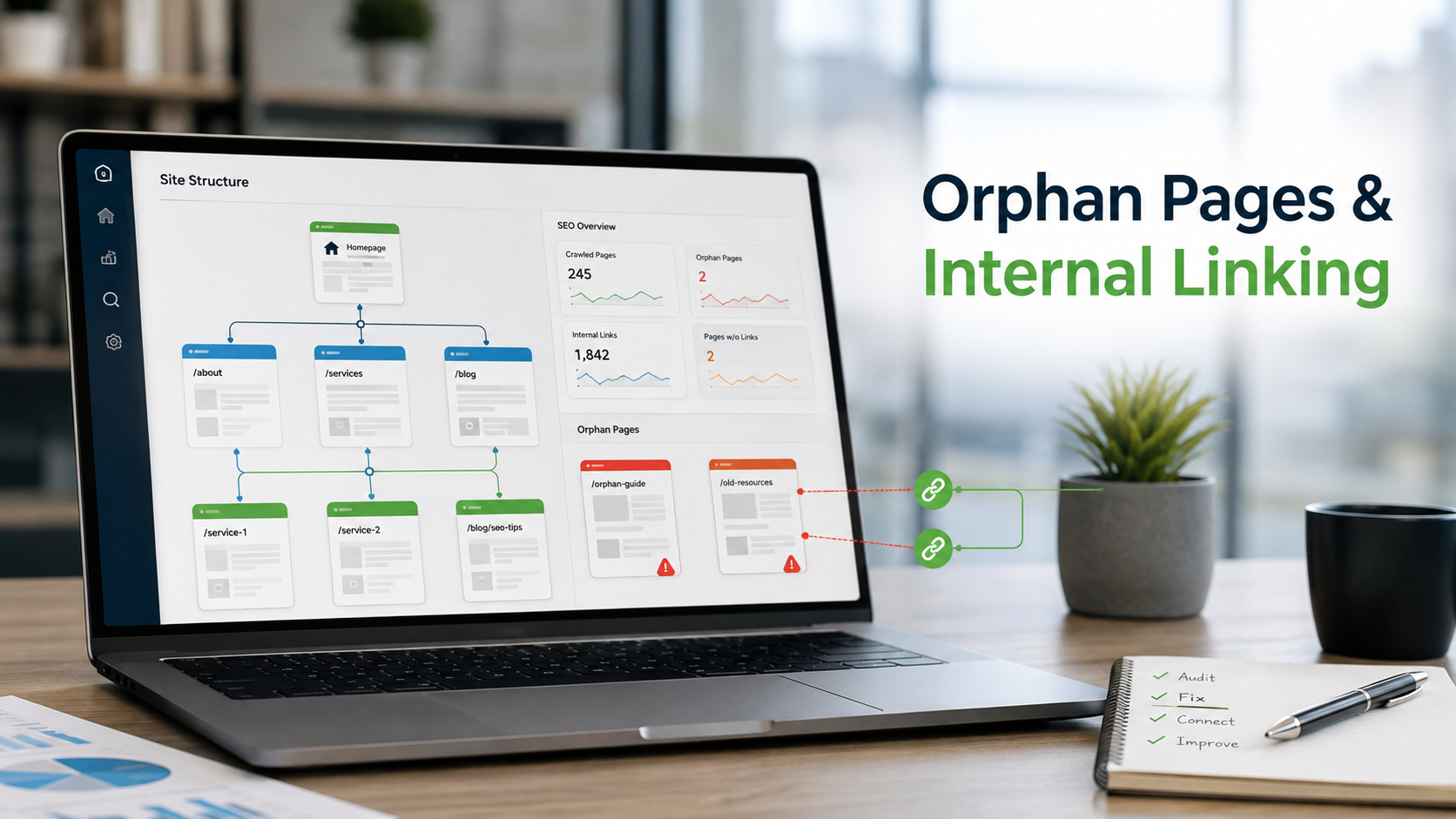
How to Find Orphan Pages and Fix Your Internal Linking
Every page on your site should be reachable through at least one link. When it is not, search engines struggle to find i...
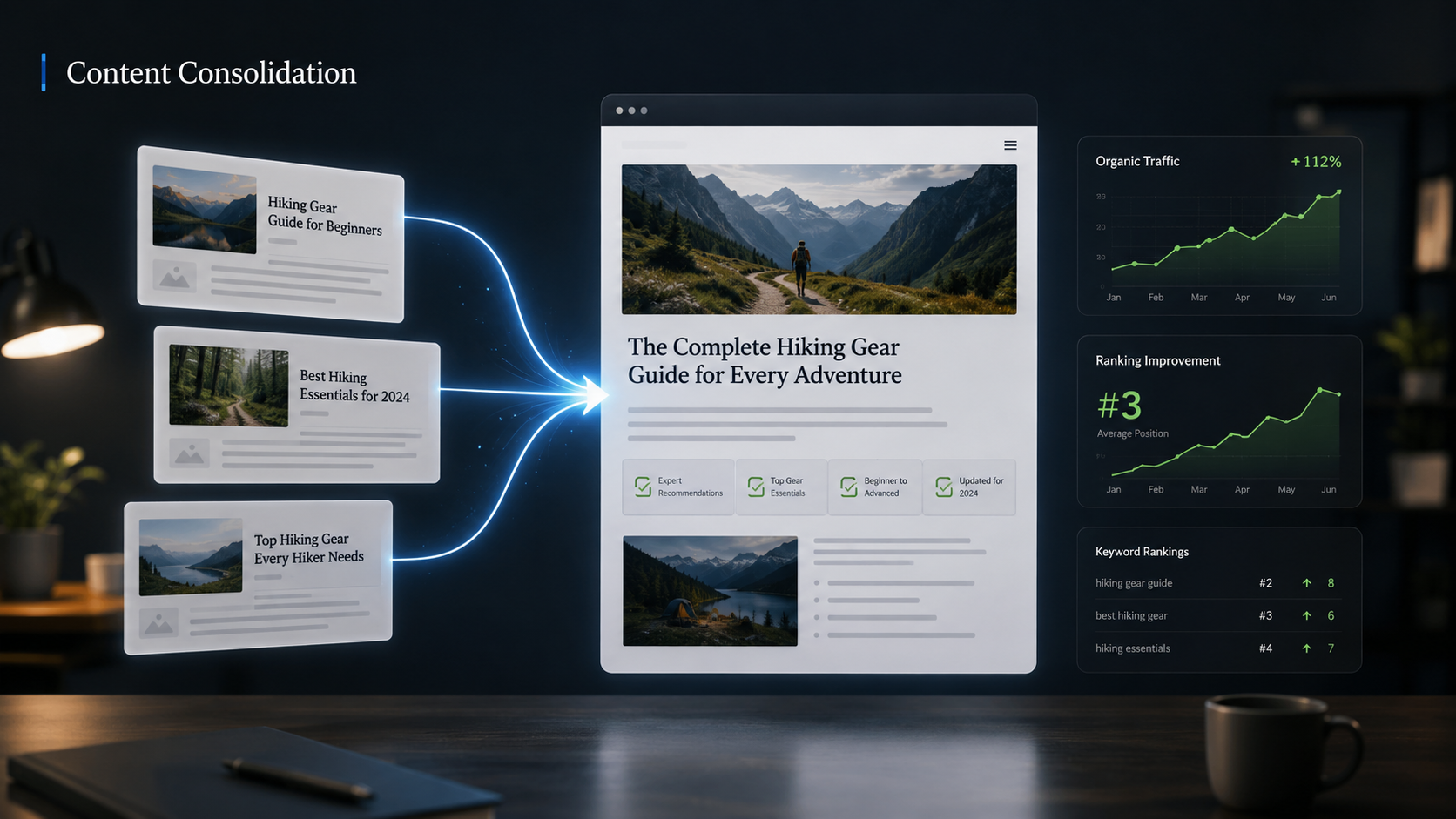
Content Consolidation: When to Merge Competing Articles
When two or three of your own pages chase the same topic, they compete with each other instead of the rest of the web. H...
Please log in or create an account to join the discussion.