How to Choose the Right URL When Merging Blog Posts


Pick the right URL when merging blog posts and the combined page can outrank every original. A simple, data backed method for choosing the survivor.
So you have found the problem. Two or three of your blog posts are chasing the same keyword, trading places in search results, and none of them is winning. You have decided to merge them into one stronger page.
Now you hit the question nobody warns you about. Which URL do you keep?
It feels like a small detail. It is not. Choose wrong and you can redirect your most linked page into your weakest one, hand years of earned authority to a URL that has none, and spend the next two months wondering why the merge made things worse. Choose right and the combined page often climbs higher than any of the originals ever managed.
This post walks you through making that choice with confidence. If you are still on the fence about whether these posts should be merged at all, it helps to understand when consolidation fixes a problem and when it creates one, which is covered in detail in this guide to content consolidation and when to merge competing articles. Everything below assumes you have already said yes.
Why this decision is worth getting right
Merging done well is one of the highest return moves in content marketing, and the numbers back that up. Across industries, sites that cut page count and concentrated their coverage saw traffic go up, not down.
What consolidation delivers when it is done properly
| Source | What they did | Result |
|---|---|---|
| SMX Munich study of 1,445 domains | Reduced page count through topic consolidation | Median traffic up 103% for B2B sites, 93% for fashion, 57% for medical, 54% for auto |
| Inflow ecommerce case study | Merged and updated overlapping pages, then tested for five weeks | Clicks per day up 70%, impressions up 92% |
| Digital Strike client case study | Migrated similar content spread across many pages onto one | Organic traffic up 134% year over year, record monthly leads |
| Baremetrics blog | Consolidated several older posts into one long form article | Traffic to the merged article up more than 400% |
| Search Engine Journal microsite merge | Folded a separate microsite into the main domain | Organic traffic up 24.7% month over month, 18.9% year over year |
Notice what every one of these has in common. The gains came from making existing pages work harder, not from publishing anything new. The URL you keep is the vessel all that gain pours into, which is exactly why the choice matters.
The mistake almost everyone makes
Here is how most people pick the survivor. They open all three posts, read them, and keep the one that is newest or best written. It feels sensible. It is usually wrong.
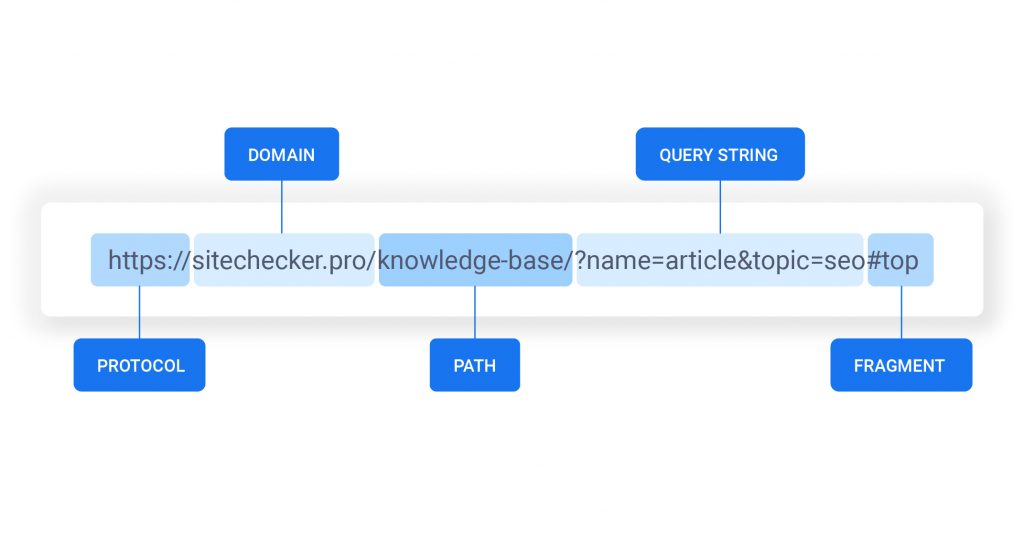
Content is easy to move. You can take the best paragraphs from any post and drop them into any URL in an afternoon. What you cannot move is everything attached to the address itself: the backlinks other sites have pointed at it, the rankings it has built over years, the shares and bookmarks scattered across the web.
All of that lives on the URL, not in the words. So flip the logic. Keep the URL with the most history, then make the content on that URL the best version. The quality of the current draft should never decide which address survives.
What actually matters, in order
When you are comparing URLs, a handful of signals do most of the work. The order matters, because they will not always agree.
Backlinks come first. Specifically, how many different websites link to each URL. One link each from twenty real sites is worth far more than fifty links from a single forum thread. Pull this from the backlink report in Ahrefs or Semrush and ignore anything that looks like spam.
If you want a reason to put links ahead of everything else, the data from Ahrefs' study of roughly 14 billion pages is hard to argue with.
Why links lead the decision
| Finding | Figure |
|---|---|
| Pages in the study that get zero traffic from Google | 96.55% |
| Pages that get between one and ten visits a month | 1.94% |
| Pages with no referring domains that still earn 1,000+ monthly visits | About 1 in 6,671 |
| Relationship between referring domains and organic traffic | Positive and consistent across the dataset |
Source: Ahrefs search traffic study
In plain terms, the URL in your cluster that has earned links from real sites is sitting in a small minority of the web. Throwing that away to keep a prettier slug is a bad trade.
Rankings come second. Which URL does Google already prefer for your target query? Open Search Console, filter the Performance report by that query, and watch the Pages tab over six months. Google's own walkthrough of common tasks in the Performance report shows exactly where those filters live if you have never used them this way.
Clicks and conversions come third. Rankings tell you what Google likes. Clicks and conversions tell you what readers like. A page that ranks slightly lower but turns twice as many visitors into subscribers is often the more valuable one.
The slug comes last. Yes, a clean, short, keyword rich address is nice to have. But a clumsy slug is not a reason to walk away from a URL with forty linking sites. You can live with an awkward address far more easily than you can rebuild authority from scratch.
A simple workflow you can reuse
Run this every time you merge, and the decision stops feeling like a coin flip.
1. Write down every URL in the cluster. Include old versions, near duplicates, and anything that already redirects into one of them.
2. Record the numbers before you touch anything. For each URL, note referring domains, average position for the target query, clicks over the last year, and conversions. Export it. This is your baseline, and it disappears the moment the redirects go live.
3. Sort by referring domains. The leader here is your default winner. It takes a strong reason to overrule it.
4. Check what Google is already ranking. If the backlink leader is also the page Google shows most often, you are done. If not, backlinks still win, because rankings follow authority after a merge, not the other way around.
5. Let conversions break any remaining tie. When two URLs are close on links and rankings, keep the one that earns more for the business.
6. Find every internal link that points at the losers. Crawl your site with Screaming Frog or any crawler you already use and export the list. You will update these to point directly at the survivor, because every redirect your own site relies on is a small leak. Google's short note on how 301 redirects work in Search explains why direct links are always the better option.
When the signals disagree
This is where people get stuck, so here are the common conflicts and how to resolve them.
- One URL has the links and another ranks better, keep the one with the links. Rankings will catch up.
- If one URL has the links and another converts better, lean toward the converter unless the link gap is huge. Conversions are the hardest thing to rebuild.
- One URL has the links and another has the prettier slug, keep the links. Fix the content so the page still delivers on what the address promises.
- If every URL is roughly equal, go with the cleanest slug and the longest indexing history.
Should you just start fresh with a new URL?
It is tempting. A tidy new address, no baggage, a clean slate. Please do not.
A brand new URL has no links, no rankings, and no track record. You would be redirecting your entire cluster into a page Google has never seen and asking it to rebuild trust from zero. That is the slowest possible route to the result you want.
There are only three situations where a new URL makes sense: every existing URL carries a penalty or a toxic link profile you cannot clean, every existing slug is so wrong that the merged topic would be misleading at that address, or the merged page is becoming something else entirely, like several articles turning into a tool or a product page. If none of those apply, keep the strongest existing URL and move on.
What happens to the pages that lose
Each losing URL gets a permanent redirect straight to the survivor. Not to the homepage, not to a category page. Off topic redirects tend to get treated as soft errors, and the value you were trying to preserve simply vanishes.
Sometimes a losing page has to stay live for a while, maybe for a campaign or a partner link. In that case, use a canonical tag pointing at the survivor instead of a redirect, and switch to a redirect once the page can finally come down. Google explains when to use each approach in its guide to consolidating duplicate URLs, and it is worth a five minute read before you ship a batch.
A quick example
Imagine three posts about email subject lines. Here is how they stack up before the merge.
Three competing posts, side by side
| URL | Referring domains | Average position | Clicks per year | Notes |
|---|---|---|---|---|
| /email-subject-lines-2021/ | 42 | 11 | 1,800 | Oldest, strongest links, dated slug |
| /best-email-subject-lines/ | 9 | 8 | 2,400 | Newest, ranks best, thin content |
| /subject-line-tips/ | 3 | 19 | 300 | Clearly the weakest |
| Combined baseline | 54 | 4,500 | What the merged page has to beat |
Most people would keep the second one. It ranks best and gets the most clicks. But the right answer is the first. It holds nearly five times the linking sites of its closest rival, and once you fold in the stronger content from the other two, it will hold the rankings as well. The dated slug is annoying, but it is a far smaller problem than throwing away 42 sites that chose to link to you.
Keep the 2021 URL, rebuild the page so it becomes the complete guide, redirect the other two into it, update every internal link, and hold onto that combined baseline of 4,500 clicks so you can check the merged page against it later.
How you will know you chose well
Give it time. Rankings often wobble for a week or two while redirects settle, so do not judge the result on day three.
In the first two weeks, confirm the old URLs forward cleanly in a single hop and nothing is throwing errors. At 30 days, check the survivor's position for the target query. It should be steady or better than the best of the old pages. At 90 days, compare clicks and conversions to the combined baseline. One page should now beat the old total.
If it does not, the URL choice is rarely the culprit. More often the merged page still reads like three posts stapled together, or the internal links were never updated. Fix those before you second guess the address.
The bottom line
Picking the right URL is a numbers question, not a taste question. Count the sites that link to each page, confirm which one Google already ranks, see which one readers actually click and buy from, and only then look at how the slug reads.
Keep the address with the most history. Make the content on it the best version. Redirect everything else straight to it and update your internal links so nothing depends on the redirect.
Do that, and merging stops being a gamble. It becomes the most reliable way to turn several pages that could not win into one that finally does.
Discussion 0
More posts

NovelAI: An Hour of Notes Before I Wrote a Single Word
A hands-on NovelAI review: the broken sign-up, the encryption catch, real pricing, the models, real user reviews, and wh...

Best Job Portals for Content Writers in 2026 (7 Platforms That Actually Deliver Work)
Discover the 7 best job portals for content writers in 2026.

Where to Find Technical Writing Jobs
Technical Writing Jobs Are Hiding in Plain Sight: 15 Places Smart Writers Look First (And Why Most People Never Find The...
Please log in or create an account to join the discussion.